

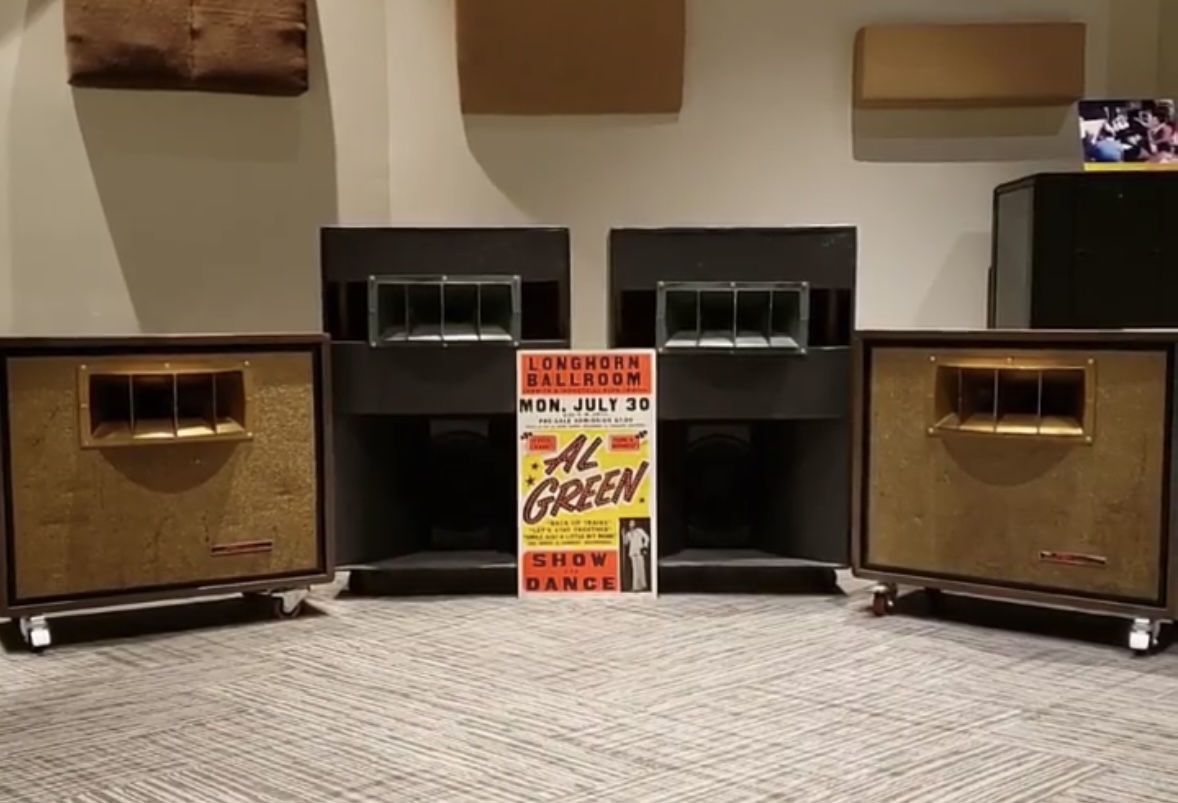
Memphis, Tennessee | From the EgglestonWorks Archives
Few places have left a greater mark on American popular music than Stax Records. From its modest beginnings in Memphis, Stax helped define the sound of Southern soul, producing recordings by Otis Redding, Sam & Dave, Booker T. & the M.G.’s, Isaac Hayes, Carla Thomas, and countless others whose music continues to resonate around the world.
Behind that remarkable musical legacy was a recording studio filled with musicians, engineers, instruments, and equipment that helped bring those recordings to life. Among the equipment were a pair of imposing Altec Lansing Voice of the Theater loudspeakers, used for playback sessions at Stax from 1960 to 1976.
Decades later, EgglestonWorks would have the opportunity to help preserve these remarkable pieces of Memphis music history.
A Remarkable Journey
When the original Stax studio ceased operations, the Altec speakers found a new home at Steve Cropper’s Trans Maximus studio in Memphis. There, they continued their working lives in a facility used by artists including Jeff Beck, John Prine, Poco, and Tower of Power.
Eventually, the speakers made their way back to the Stax Museum of American Soul Music, located on the site of the original recording studio. They became part of the museum’s recreated Studio A, where visitors could see the equipment that had once been part of the Stax story.
By then, however, the Altecs were no longer operational.
In 2017, following conversations with the museum about its collection of historic audio equipment, the speakers were brought to the EgglestonWorks factory in Memphis for evaluation and restoration.

Bringing the Altecs Back to Life
The decades had taken their toll. The cabinets showed considerable wear, previous repairs had left their mark, and one of the original crossover networks had been destroyed.
Remarkably, the original Altec drivers were still functional.
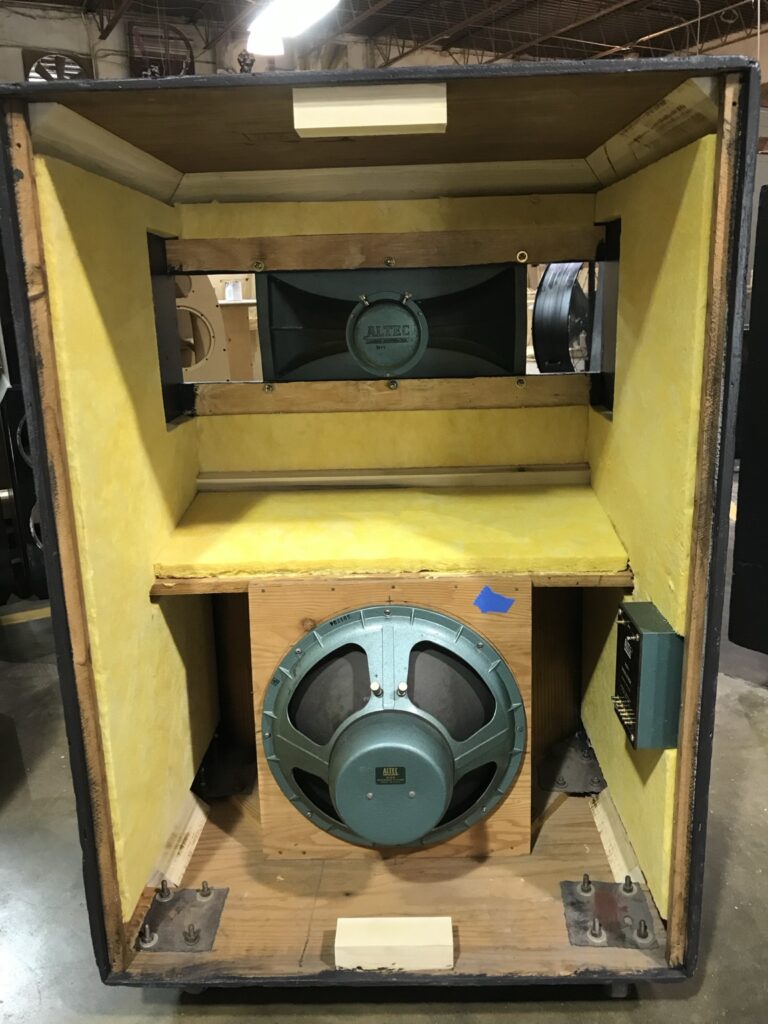
The restoration required careful disassembly, inspection, repair, and reconstruction of the components necessary to return the speakers to working condition. Throughout the process, the objective was to preserve their original character rather than modernize them.
The cabinets were restored to their original black finish, while the internal components received the attention necessary to make the loudspeakers functional once again.
Working on equipment with this kind of history offered a fascinating glimpse into another era of loudspeaker design. These were large, purpose-built systems from a time when efficiency, dynamic capability, and the ability to fill a room with sound were paramount.
There were also a few reminders of the human history surrounding the equipment. Among the unexpected discoveries inside one of the cabinets was an old bottle opener — a small artifact that invites some entertaining speculation about the long nights and lively sessions these speakers may have witnessed.

Another Piece of Stax History
The project eventually grew to include a second pair of historic loudspeakers from the museum’s collection: a set of vintage Seeburg speakers that had also been used at Stax.
Like the Altecs, the Seeburg systems represented another chapter in the evolution of sound reproduction. They, too, were brought to EgglestonWorks for renovation, giving the project a broader purpose than the restoration of a single pair of speakers.
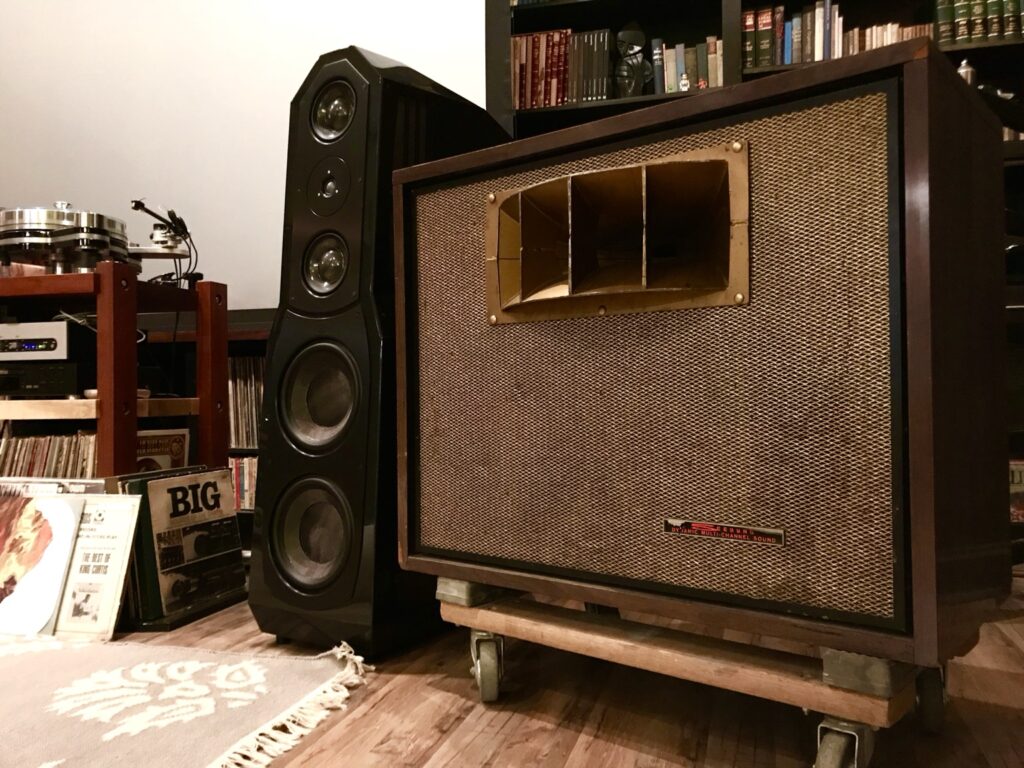
Together, the two projects offered an opportunity to work with equipment whose significance extended well beyond its technical design.
These were not simply old loudspeakers. They were surviving pieces of a place that helped change American music.
Back Where They Belong
Following their restoration, the Altec speakers returned to Studio A at the Stax Museum of American Soul Music, once again operational and restored to their original appearance.
For EgglestonWorks, the project was a particularly meaningful connection to Memphis and its extraordinary musical heritage. While our own loudspeakers are designed and built using contemporary materials and technology, the fundamental purpose remains much the same: to bring recorded music to life.
It is fitting that these historic systems, after decades of use, travel, and eventual retirement, have found their way back to the place where so much of their story began.
And it is gratifying to have played a small part in preserving that story for future generations.
Learn more about the Stax Museum of American Soul Music: https://staxmuseum.com/
No responses yet